


welcome to our visual learing page.
This page has been designed to your experience through visual learning. I recognize that we all have unique learning styles, and my dedication to our community motivates me to share this with you. Over the past 20 years, I've self-funded expeditions that blend my love for learning, travel, and history while exploring black culture, traditions, and identity around the world. I was raised with the belief that each one teaches one.
black history is world history, please enjoy and share.
sickle cell
Sickle cell disease is a genetic condition linked to ancestry and regions with a historical prevalence of malaria, than being confined to a single race. Although it predominantly affects people of color, particularly those of Black African descent, as well as and Indian populations, it also influences diverse ethnic and regional groups globally.


Click on any image to access information and read.

uk sickle cell society
Mondays and Tuesdays
078422459980 or 020 89617795
Contact them Wednesday, Thursday, and Friday at 07809736089 from 9 AM to 5 PM.

Let’s talk


working together to spread awareness about Sickle cell.
Sickle cell disease has shattered the lives of my brother, nephew, and close family friends, who endure relentless pain and hospital visits, turning joyous moments into heartbreaking crises. We need to speak openly about this struggle, asking the right questions in our relationships to foster understanding and hope, ensuring that no one faces the challenges of sickle cell alone.


my visual, black histroy tour in
brazil



South America
A side street in Little Africa, Rio de Janeiro
Christ the Redeemer
Statue created in 1931

Cemetery of the new blacks


Workers commencing home repairs initially believed they had animal bones but soon discovered human jawbones along with thousands of skeletal fragments, revealing a slave cemetery.
Remains of an enslaved African person found during renovations of a home.
My emotional journey to the Museum of Preso Novos Cemetery in downtown Rio de Janeiro was deeply personal and significant, especially as a Black man traveling from London to connect with the rich tapestry of Black history in Brazil. Standing on the very ground where approximately 30,000 enslaved Africans were buried between 1769 and 1870, I felt the weight of their stories and struggles resonate within me. This poignant chapter of Brazil’s history has found new life through the museum, which reveals the harrowing truth of a past too often overshadowed.
Discovered during renovations in the 1990s, this sacred site served as a final resting place for those who perished shortly after arriving, victims of the brutal conditions aboard slave ships. Merced Guimarães dos Anjos, the homeowner who unearthed the remains, expressed an urgent responsibility to preserve this history, stating, “It was doomed to be forgotten for eternity if we had done nothing.” Her dedication transformed a forgotten cemetery into a vital memorial.
The museum, "Cemitério dos Pretos Novos," highlights the diverse origins of the enslaved, with dental examinations revealing cultural practices that transcend borders. Under the direction of Ricardo Ventura Santos from the Brazilian National Museum, excavations have surfaced the grim reality of their treatment bodies discarded in ditches, often burned, alongside personal belongings that offer glimpses into their lives.
As I walked through the museum, I was not merely an observer; I was a participant in an emotional journey that connected me to the resilience and tragedy that echo through generations. This site stands as a powerful testament to the millions who suffered under slavery, urging all of us to remember, reflect, and honor the profound impact of this dark chapter in Brazilian history. My visit was not just research; it was a call to recognize and celebrate the enduring spirit of those who came before us.


IThe graffiti of Zumbi dos Palmares can be found on a wall at **Pedra do Sal** in Rio de Janeiro, Brazil. This vibrant urban art piece symbolizes a dynamic political landscape, celebrating Black resistance and honoring the legacy of the legendary Quilombo leader. The ever-changing graffiti serves as a poignant reminder of Zumbi’s fight for freedom and cultural identity.
Zumbi dos Palmares,
This graffiti monument is located next to the historic and religious site, Pedra do Sal, in Rio de Janeiro, where Samba originated.
Largest street Art Mural in the World.
Standing next to Etnias, Eduardo Kobra's record-breaking mural at Rio de Janeiro's waterfront, was an incredible experience. This vibrant artwork, recognized by Guinness World Records as the largest mural by a single artist, celebrates humanity’s diversity through portraits of individuals from different cultures.
Kobra’s use of bright colors and intricate details embodies the Olympic spirit, conveying a powerful message of unity and shared ancestry. Feeling the intense gaze of the characters deepened my appreciation for our connections, leaving me inspired by the mural's legacy in a city celebrated for its rich culture.

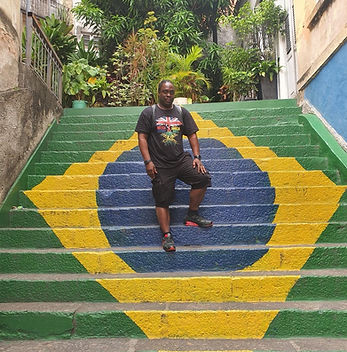
Escadaria Selarón.
The Selarón Steps, created by Chilean artist Jorge Selarón, began as a personal project in the late 1990s when he started covering the staircase connecting the Santa Teresa and Lapa neighborhoods with vibrant tiles from around the world. Over the years, it transformed into a beloved cultural landmark, symbolizing Brazil's artistic spirit and multicultural identity.
In this moment, standing on these beautiful steps, I feel connected to both the art and the history that make Brazil so unique.
Mercedes Baptista
Mercedes Baptista, born on May 20, 1921, and passing on August 19 2014, was a Brazilian ballet dancer choreographer. She was the first Black woman to join the Theatro Municipal do Rio de Janeiro.
Mearning of The Flag
Understanding the Brazilian Flag: Its Components and Significance
Paris in Brazil: The Restructuring of Brazil.
Candomblé: An Afro-Brazilian Faith.
When the elite lived at the pinnacle of Brazil.
Colorism in Brazil.
Rio de Janeiro The largest entry point for enslaved Africans .


Valongo Wharf: A Historical Landmark
Valongo Wharf (Cais do Valongo) in Rio de Janeiro is the largest entry point for enslaved Africans in the Americas. Between 1811 and 1831, around 900,000 to 1 million individuals disembarked here, forced into labor on Brazil’s plantations.
In 2017, UNESCO designated the site as a World Heritage Site, recognizing its significance alongside places like Auschwitz and Hiroshima, ensuring that the horrors of the transatlantic slave trade are never forgotten.
Primeira Favela
What is a Favela, exactly?
A **favela** is a densely populated urban area in Brazil, marked by low-income self-constructed homes. Usually located on hillsides or the outskirts of cities, favelas often arise without official planning, resulting in limited access to essential services such as sanitation and electricity. Despite facing these obstacles, they cultivate lively communities with diverse cultural expressions and informal economic activities. To understand favelas, one must recognize the hardships and resilience of their inhabitants..
**No Support for Freed Slaves:** After Brazil abolished slavery, freeing about 700,000 enslaved individuals, the government offered no land, housing, no money,,or job assistance, leaving many without support.
**Pushed to the Hills:** In search of work, many former enslaved people moved to cities like Rio de Janeiro but faced barriers to affordable housing. Consequently, they built makeshift homes on steep hillsides, resulting in the formation of favelas.
This illustrates the systemic neglect that shaped these communities and their ongoing struggle for dignity..
Reasons for the Formation of Favelas Following Abolition.
The Beginning of The Favelas. The First Project Housing.

Profit over life: The arrival of enslaved Africans.
A map of the enslaved Africans who came from Africa.
Miniature of a Favela
Location: Rio de Janeiro, Brazil
Date: June 1, 2016


Here’s the list translated into English:
1. Gorée (Senegal)
2. Cacheu (Guinea)
3. Elmina (Ghana)
4. Ajuda (Benin)
5. Eko (Lagos, Nigeria)
6. Calabar (Nigeria)
7. Loango (Congo)
8. Luanda (Angola)
9. Benguela (Angola)
10. Cape Town (South Africa)
11. Inhambane (Mozambique)
12. Mozambique Island
This miniature depicts a lively favela community, highlighting the Projecto Morrinho social initiative. It honors the resilience and culture of favela residents by capturing their daily lives with intricate details and vibrant colors, while also bringing attention to their distinctive challenges.

Humanise The home The Resistance.

In the face of aggressive government eviction campaigns in Brazil, residents of favelas employed creative art, portraits, and vibrant paint to humanize their, highlight their struggles, and physically hinder bulldozers from demolishing their homes.
Brazil Reclaiming Afro-Brazilian Heritage.
My Day In The Favela


Translation In English.
Let this sink in: did you know...
That the U.S. government Pays funding for various grants and research initiatives that focus on Afro-Brazilian history and culture, whereas the government provides minimal to no financial support for similar projects?

African Heritage Circuit
Cais do Valongo was built in 1811 for landings and the trade in enslaved Africans. It was remodeled in 1843 as Cais da Imperatriz (Empress's Wharf). It was filled in 1911 to make way for Praça do Comércio and was rediscovered in 2011 during the Porto Maravilha project. Cais do Valongo is now recognized as a UNESCO World Heritage site.
Do you know where?
Rio de Janeiro Name orignate from
"Rio de Janeiro" translates to "January River." Rio Means "River" in Portuguese. de Janeiro: Translates to "Of January," named after the month explorers arrived in 1502. This name emphasizes the city's geographical and historical importance.

Did you know?
Did you know that Brazil was the last country in the Western Hemisphere to abolish slavery? It wasn't until May 13, 1888, that slavery was officially ended with the signing of the Lei Áurea (Golden Law). This landmark legislation marked a pivotal moment in Brazil's history, bringing an end to a longstanding institution
Did you know?
Did you know that Brazil was the last country in the Western Hemisphere to abolish slavery? It wasn't until May 13, 1888, that slavery was officially ended with the signing of the Lei Áurea (Golden Law). This landmark legislation marked a pivotal moment in Brazil's history, bringing an end to a longstanding institution

Did you know?
Did you know that Brazil was the last country in the Western Hemisphere to abolish slavery? It wasn't until May 13, 1888, that slavery was officially ended with the signing of the Lei Áurea (Golden Law). This landmark legislation marked a pivotal moment in Brazil's history, bringing an end to a longstanding institution

Did you know?
Did you know that Brazil was the last country in the Western Hemisphere to abolish slavery? It wasn't until May 13, 1888, that slavery was officially ended with the signing of the Lei Áurea (Golden Law). This landmark legislation marked a pivotal moment in Brazil's history, bringing an end to a longstanding institution.
location known as little Africa in Brazil.

Did you know?
Did you know that Brazil has one of the largest Black populations in the world? Today, it is home to the largest community of African descendants outside the continent of Africa. Over half of Brazil's national population identifies as either preto (Black) or pardo (mixed-race), reflecting the country's rich cultural diversity and deep historical ties to Africa.

Did you know?
Did you know that freedom fighters established independent kingdoms called quilombos? Enslaved individuals who escaped bondage created these autonomous and thriving settlements. The largest and most renowned of these was Quilombo dos Palmares, which endured for nearly a century and provided refuge for thousands of people. This remarkable community stands as a testament to the resilience and courage of those who sought freedom.
Zumbi Palmares icon and Legend

Did you know?
Did you know Zumbi dos Palmares is a national hero?
Zumbi was the last leader of Quilombo dos Palmares and a symbol of resistance to slavery. He was killed on November 20, 1695 . That date November 20 is now observed across Brazil as *Dia da Consciência Negra* (Black Consciousness Day), a day that honors his legacy and encourages reflection on racial equality and the history of Afro-Brazilians.
Zumbi By
Sadakne Baroudi Historian.
Marcus Historian.


A graffiti picture of Zumbi in the back ground on the wall Zumbi lives on in people heart.


Did you know enslaved Muslims led the Malê Revolt in 1835?
In Salvador, Bahia, a coalition of enslaved and freed West African Muslims many literate in Arabic organized the *Revolta dos Malês* on January 24 25, 1835. Inspired by Islamic principles and resistance to slavery and religious persecution, the uprising was a major urban revolt that powerfully challenged the Brazilian slave system.

Did you known
Brazil received the most enslaved Africans in the Americas?
From the 16th to the 19th century, Brazil imported an estimated 4.9 million enslaved Africans about 37% of the entire transatlantic slave trade to the New Worldmaking it the largest single destination in the Americas.


Capoeira is a distinctive Brazilian art form that blends acrobatic movement, percussion, song, and self‑defense. Enslaved Central Africans especially Angolan practitioners adapted traditional fighting games such as *engolo*, transforming them into a disguised, communal practice that preserved combat techniques, cultural memory, and resistance under slavery. Today capoeira remains a living legacy of African heritage in Brazil.
Did you know?

Did you know?
The historic port quarter of Rio de Janeiro known as *Pequena África* became a vibrant cultural hub where hundreds of thousands of enslaved Africans arrived through the Valongo Wharf. Community spaces and ritual sites such as **Pedra do Sal** and local house‑saloons nurtured musical blends of African rhythms, Portuguese melodies and Afro‑Brazilian religious chants, giving rise to the samba traditions that evolved into modern samba.
Samba originated in this vibrant location, where legendary figures like Donga, Pixinguinha, and João da Baiana gathered to innovate. Their collaboration shaped modern samba and choro music, establishing a rich cultural heritage in Brazilian music.
Sadakne Baroudi, Brazilian Historian
featured In the Black History documentary "Enslaved," featuring Samuel L. Jackson.
RELIGIOUSOLOGY
History Culture Spiritually and Food


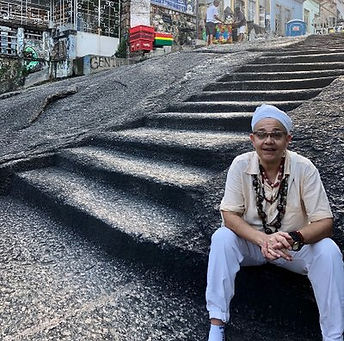
Scholar Sadakne Baroudi from Rio de Janeiro is dedicated to preserving Black culture in Brazil. She passionately advocates for the recognition of Black history, emphasizing that it is an integral part of world history. I am grateful for the time spent with her, celebrating our shared heritage and cultural identity.
They dont care about us.
michael jacksons makes a stand through music.
Watch the video to understand the true essence of Michael Jackson's song "They Don't Care About Us," which highlights the struggle for justice and the power of music.
Welcome to Salvador, Brazil, the home of African culture outside of Africa. This is where Michael Jackson filmed "They Don’t Care About Us." I had the pleasure of staying at a hotel right across from the location of his iconic video, immersing myself in this vibrant community.
Ancient African religious beliefs and traditions declined in Africa due to slavery and colonization but thrive in Brazil.
If the Ancient Ancestor, who sacrificed their life for Africa, were to return, how do you think they would react seeing their descendants embrace new religions, customs, and traditions that they once opposed, seemingly neglecting their own heritage? viewing it as idol worship, witchcraft, or even evil, dismissing the value of ancient African practices.
click below
During my trip to Brazil, I discovered that many enslaved Africans perceived Africa as having been systematically and spiritually devastated, convinced it would never return to the land they once knew because of colonialism. As a result, they fiercely fought to preserve its essence within themselves through practices like Candomblé.
Orishas Unbound: The Resilience of African Spirituality in Brazil After Slavery.
The Brotherhood, And Black Catholic.
click Below
Belief Shop
Mestre Valentim, also referred to as Master Valentine in English, lived from 1745 to 1819.
Reflect on previous experiences.
Rio de Janeiro Brazil.

Rio de janeiro in 1608
The establishment of the new city and the arrival of enslaved Africans in Rio de Janeiro, along with the presence of decaying corpses.


Rio de janeiro 1650
Millions of people walk over Hidden Black Cemetery daily, unaware of its concealed history.

leaving Rio de Janeiro travelling to Salvador Brazil
I travelled from London, England, to Rio de Janeiro, Brazil, and then continued through Argentina and Uruguay, and back to Rio de Janeiro researching Black history, culture and traditions across South America. My journey eventually led me to Salvador, Brazil one of the most important centres of African culture in the African diaspora.
Salvador was truly unforgettable. I arrived on December 4, two days after my birthday, to experience the **Festa de Santa Bárbara**, a historic celebration that brings together Catholic devotion and Candomblé traditions. In Candomblé, Santa Bárbara is associated with **Iansã, also known as Oyá**, the orixá connected with winds, storms and lightning. The celebration gave me a deeper appreciation of Salvador’s enduring African heritage, spirituality, music and traditions, which are woven into the city’s identity. ([ba.gov.br](https://www.ba.gov.br/ipac/festa-de-santa-barbara?utm_source=openai))
I travelled by Uber from Salvador Airport to my hotel in the historic cultural district. However, because the streets were filled with people celebrating the **Festa de Santa Bárbara**, the Uber could not reach the hotel. I left the car and continued on foot walking straight into the heart of the festival.
What an incredible welcome to Salvador! Arriving on **December 4**, the day of this important celebration, felt almost as though the city had prepared it especially for me. I could not have arrived on a better day to experience Salvador’s rich African heritage and Afro-Brazilian culture.
What the celebration represents
**Santa Bárbara and Iansã:** In Salvador’s religious syncretism, Catholic devotees honour Santa Bárbara, while Candomblé practitioners honour **Iansã, also known as Oyá**, an orixá associated with winds, lightning and storms.
**The colour red:** Red represents the strength, courage, passion and spiritual power associated with Iansã. In Catholic tradition, it also represents martyrdom and sacrifice.
**Red and white clothing:** These colours are strongly associated with the celebration and fill the streets of Salvador on December 4.
**African heritage:** The festival demonstrates how African spiritual traditions have been preserved, adapted and celebrated within Brazilian culture.
**Cultural significance:** The Festa de Santa Bárbara has been celebrated in Salvador for centuries and is recognised as part of Bahia’s intangible cultural heritage. ([ba.gov.br](https://www.ba.gov.br/ipac/festa-de-santa-barbara?utm_source=openai))

I’m eager to return to Brazil, the Black Mecca of South America, to pay tribute to Luiz Gama. Born to an African mother and a Portuguese father, he was sold by his father to settle a gambling debt and endured domestic slavery. Despite these, he became a self-taught lawyer and fought for freedom of over 500 enslaved individuals; his story is an essential part of Black and world history.
This icon passed away due to complications from diabetes.
ture black legend, luiz Gama, free over 500 slave.
Candomblé: An Overview.

"Travel note Salvador, Brazil
Author: Lloyd Remel Miller
While in Salvador, Brazil, I learned about Candomblé, a vibrant Afro‑Brazilian religion that emerged among enslaved Africans as a way to preserve their history, culture, and identity. Rooted mainly in Yoruba, Fon, and Bantu traditions, it blends African cosmologies with Indigenous influences and Catholic symbols introduced during colonial times. The religion’s rhythmic drumming, call‑and‑response singing, and ritual dances honour the orixás (deities) and reinforce community and resilience an unforgettable window into Salvador’s spiritual life.


Travel note Salvador, Brazil
A historian told me enslaved Africans felt the Africa they left behind was lost overrun by colonialism, new religions, and a new identity. They believed if their ancestors returned, they wouldn’t recognise it: the old ways were gone. Brazil became a new Africa, where people carried ancestral memory and fought fiercely to keep language, ritual, music, and faith alive. It’s a story of profound loss and stubborn resilience: grief transformed into living culture.
During my research in Brazil, I learned from a historian that the true meaning of a voodoo doll significantly contrasts with the Hollywood horror narratives. Voodoo dolls are not instruments of harm; instead, they serve a profound purpose in energy work. The concept revolves around **trapping negative energy** within the doll, allowing individuals to release their own negativity and free themselves from emotional burdens. By channeling past traumas or negative feelings into the doll, they can symbolically throw away this negativity, representing a fresh start and enabling a more positive outlook on life.
Historically, European fears and misunderstandings of African religions and customs led to the demonization of voodoo. Lacking an emotional attachment to these practices, many Europeans misrepresented them through sensationalized media portrayals, transforming voodoo into a Hollywood blockbuster trope. This distortion not only mischaracterized the rich traditions of African spirituality but also contributed to a significant separation of many Africans from their own religious practices. As a result, countless individuals adopted new European concepts and religions, leading to a lasting disconnect from their spiritual heritage.
Ultimately, this understanding highlights the empowering potential of voodoo practices, focusing on healing and emotional freedom rather than fear. It emphasizes the need to reclaim and honor the true essence of these traditions, allowing individuals to reconnect with their heritage and spirituality.

Voodoo DOLL
Culture VS Hollywood


African hISTORY in BraziL, welcome to Salvador.
where AFRICAN HISTORY IS REBORN, AND THE LEGACY LIVES ON.
Black History is world History

Black history is not limited to just one month or place; it is an essential part of global history. We traveled the world to share this message, each one teach one.
AFRICAN,HERITAGE LIVE'S
ON IN SALVADOR BRAZIL.

Salvador, Brazil, the famous monumental sculptures of Yoruba gods are known as the Orixás of Dique do Tororó
AFRICAN CULTURE LIVES ON IN US.
Our Story
Every website has a story, and your visitors want to hear yours. This space is a great opportunity to give a full background on who you are, what your team does, and what your site has to offer. Double click on the text box to start editing your content and make sure to add all the relevant details you want site visitors to know.
If you’re a business, talk about how you started and share your professional journey. Explain your core values, your commitment to customers, and how you stand out from the crowd. Add a photo, gallery, or video for even more engagement.
Meet The Team


Our Clients


